The Quiet Power of a Sock Drawer That Actually Works
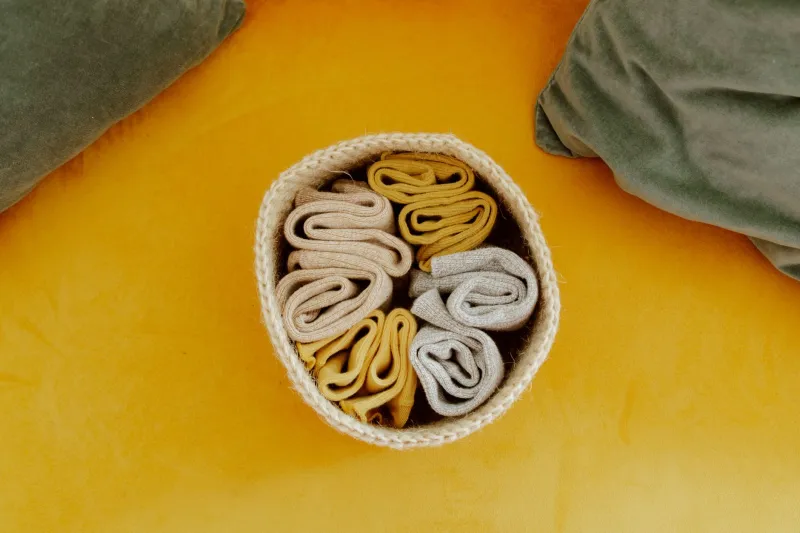
Socks are the least glamorous thing in your wardrobe and the hardest-working. They sit between you and the pavement, the boot, the trainer, the cold kitchen floor. They take the friction, the sweat and the wash cycle, then get folded away without a second thought. That is precisely why the sock drawer is such an honest little test. It shows what you actually reach for, what you keep replacing, and what you have been meaning to deal with since roughly last winter.
Start with the drawer, not the outfit
A chaotic sock drawer is rarely just about socks. It is the same small friction that shows up elsewhere: the shirt you never wear because the collar sits oddly, the jumper that has gone bobbly under the arms, the pair of boots that looked good in the shop and feel like a punishment by Wednesday. Socks are simply the cheapest place to notice the pattern.
Empty the drawer onto the bed. Not a tidy-up — a proper audit. Make three piles: keep, repair, and let go. Be honest about the keep pile. A sock has to earn its place. Does it stay up without leaving a red mark? Does it feel comfortable inside your most-worn shoes? Is the heel still where it should be? If you have been pushing the same pair to the back of the drawer for two years, it is not a sock any more. It is a decision you are avoiding.
Aim for a drawer where everything fits and everything gets worn. For most people that means fewer pairs than they currently own, but better ones. Ten to fourteen everyday pairs, a couple of warmer options and a few trainer socks is a reasonable starting point — adjust for how often you do laundry and how many days you spend in boots.
What British weather actually asks of a sock
Our weather is not extreme, but it is changeable, and that puts particular demands on socks. You want breathability for the stuffy train, warmth for the cold walk, and something that does not turn into a damp flannel inside a waterproof shoe.
For everyday wear, a cotton-rich blend with a bit of polyamide and elastane is the practical workhorse. Pure cotton feels lovely but can lose its shape and take ages to dry. A blend keeps the softness while holding up to repeated washing. Look for a reinforced heel and toe, a flat toe seam and a ribbed cuff that is snug but not tight.
For colder months, a wool mix is worth the extra. Merino is the obvious choice for softness and temperature regulation, but lambswool blends can be excellent too. A wool sock is not just a winter luxury; it is what stops a cold walk from feeling like a cold walk. Pair thicker wool socks with boots that have a little room, not ones that already fit like a glove.
Trainer socks deserve a mention because they are where many drawers quietly fall apart. Low-cut socks that slip under the heel are a false economy. Look for a silicone grip at the back or a slightly higher cut that stays put. If you wear trainers most days, buy a batch of identical pairs and stop thinking about it.
The matching myth
You do not need perfect pairs for every sock you own. You need a family. Pick two or three core colours — navy, charcoal, oatmeal, black — and let them mix. A drawer of near-matches is more resilient than a drawer of one-off novelty pairs. When one sock disappears, which it will, the other still has a job.
This is not an argument for wearing odd socks to work if that is not your thing. It is an argument for buying in multiples. If you find a sock you like, buy three pairs. Same colour, same style. Future you will be grateful when the laundry basket is full and the drawer is not.
Darning is not a personality trait
A small hole in the heel does not mean the sock is finished. Turn it inside out, use a darning needle and a bit of matching yarn, and weave across the hole in small stitches. It takes ten minutes and a podcast. The result is not invisible, but it is comfortable and it keeps a good sock in service.
If darning is not for you, that is fine too. But do not keep holed socks in a vague pile labelled 'for gardening'. Either repair them, use them for a genuinely messy job, or put them in textile recycling. A drawer full of maybes is still a drawer full of friction.
Care that earns its keep
Socks die young for predictable reasons: too much heat, too much softener, and too much tumble drying. Wash them inside out at a low temperature with similar colours. Skip the fabric conditioner — it coats the fibres and reduces breathability and elasticity. Air dry them flat or over a radiator rack rather than in the tumble dryer.
Trainer socks and any pairs with delicate cuffs benefit from a mesh laundry bag. It stops them vanishing into the machine and keeps the elastic from getting stretched. And when you put socks away, pair them loosely rather than stretching one over the other. Your cuffs will last longer.
Buy fewer, better pairs
A good sock is not complicated. It has a reinforced heel and toe, a flat seam, a comfortable cuff and a fibre mix that suits the job. It fits without bunching and stays up without digging in. It survives a wash cycle without turning into a fuzzy little sock-shaped rag.
Spend a little more on the pairs you wear most and buy them in multiples. A £12 pair worn twice a week for two years is better value than a £4 pair that needs replacing every three months. That is the same logic we apply to coats and boots, just applied to the smallest item in the drawer.
The five-minute reset
Once a season, empty the drawer and repeat the audit. It takes five minutes. You will find the pairs that have quietly given up, the single socks that no longer have a partner, and the wool ones you forgot you had. You will also find that getting dressed is slightly easier, which is the whole point of an essentials-led wardrobe.
A sock drawer will never be the most exciting part of your wardrobe. But when it works, you notice it every single day — usually by not noticing it at all.