The Winter Wedding Coat That Works With the Outfit, Not Against It
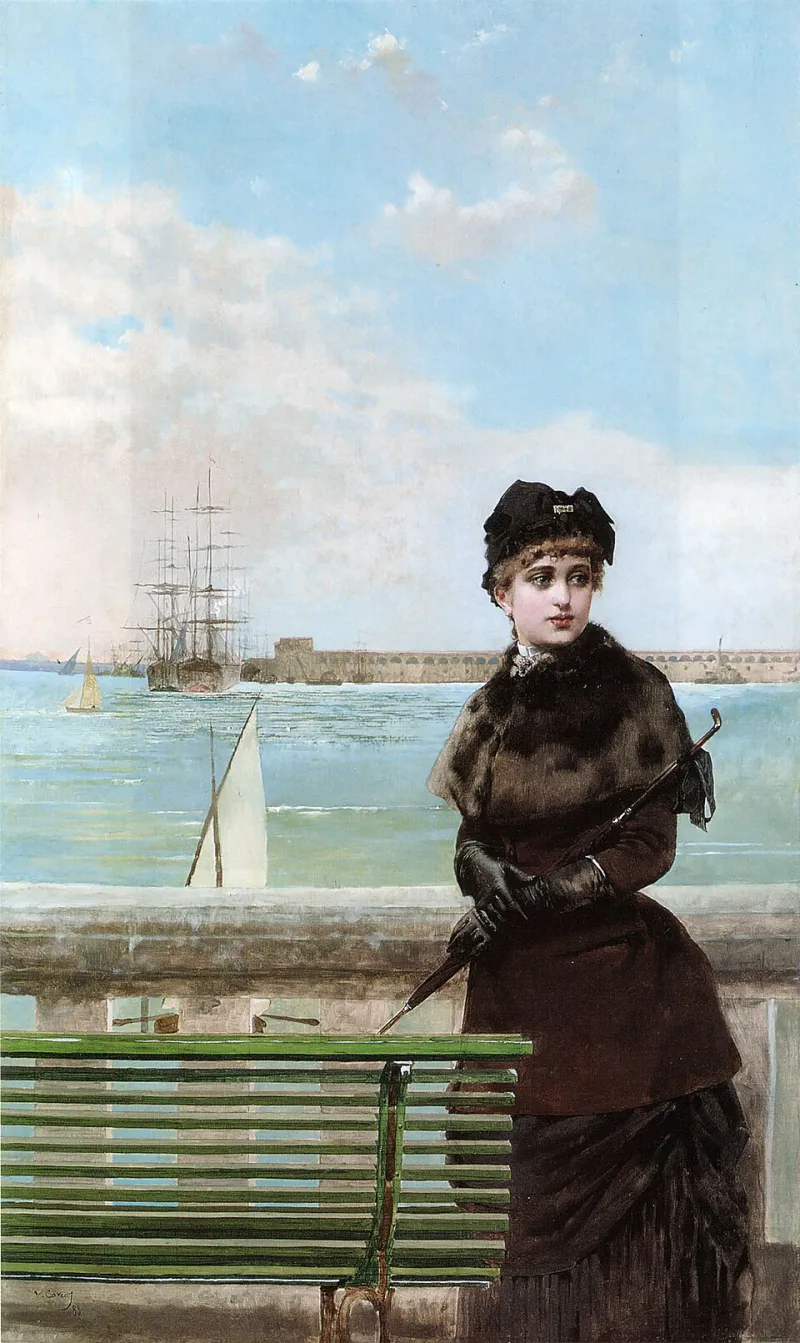
Photo: Vittorio Matteo Corcos, Public domain, via Wikimedia Commons
Winter weddings have a way of exposing the gap between the outfit you planned and the weather you actually get. You spend weeks on the dress, the shoes and the bag, then the forecast drops to six degrees with a side of drizzle. Suddenly the most important piece is the one you nearly left at home.
The wedding guest coat is not really a coat in the everyday sense. It has to do three jobs at once: keep you warm waiting for a train, look deliberate in photographs and be easy to manage once you are inside an overheated hotel. That is a tall order for a puffer jacket. It is achievable with a bit of planning.
Here is the formula we would use: one coat, two thin layers, three checks before you buy. It sounds simple because it is. The trick is applying it to the outfit you already have.
Start with the dress, not the coat
Most people shop for the coat last. Flip that. Put the outfit on first, including shoes, and look at the hem line. The coat should relate to it, not cover it by accident. As a rule, a midi dress works best with a coat that finishes at or just below the knee. If the dress is longer, choose a coat that is clearly shorter or clearly longer; a hem that sits within a few centimetres of another hem looks like a mistake. For a suit, the coat should cover the jacket shoulders but not swamp the trousers. A tailored overcoat is usually the safest shape.
Length: the difference between elegant and awkward
Longline coats look wonderful at a winter wedding, especially in the evening. They also need a trial run. Can you climb stairs without carrying the hem? Can you sit in a car without the coat bunching at the waist? Can you get on a train without it dragging on the floor? A midi overcoat is the more forgiving choice for a long day. A short jacket can work with trousers or a jumpsuit, but it rarely does a formal dress any favours. Cropped puffer jackets are brilliant for the school run and terrible for a church pew.
Fabric: wool, not bulk
The best wedding guest coats are made from dense wool or a wool blend. They hold their shape, cut the wind and look smart over occasionwear. A little cashmere is lovely if the budget allows, but a good wool blend will do the job. Avoid anything too shiny, too sporty or too bulky. A down jacket will keep you warm, but it will also make a silk dress look like an afterthought. A thin trench is fine for a mild day and useless in a cold snap. Check the lining, the seams and the shoulders. If the coat feels heavy and stiff, you will resent carrying it by 4pm.
Colour: support the outfit
Neutral coats are the easiest to live with: navy, charcoal, camel, deep green, burgundy. They work with most wedding palettes and they do not date. Black is fine, but it can read as funeral-ish next to certain outfits, especially in daylight. If the dress is patterned, keep the coat plain. If the dress is a strong colour, a tonal coat looks expensive; a clashing coat looks like a mistake. You do not need to match your shoes and bag. In fact, a coat in a different neutral often looks more considered than a full matching set.
Layer thinly, not bulkily
The mistake is wearing a big jumper under a fitted coat and wondering why the whole thing feels tight. Use thin layers: a thermal vest, a fine knit, a silk camisole. A pashmina or large scarf is useful for the church and can be folded into a bag later. Try the full outfit on together before the day. Sit down. Hug someone. Reach for a glass. If the coat pulls across the back or the sleeves ride up, size up or choose a different shape.
What to carry
Practical bits matter. A compact umbrella, a spare pair of tights, blister plasters, a safety pin. If you are wearing heels, pack foldable flats in a bag that can live under the table. A clutch is fine for the reception, but you may want a small tote for the journey. On public transport, take the coat off rather than sitting in it; you will be more comfortable and less creased. At the venue, use the cloakroom if there is one. If there is not, keep the coat on a chair back rather than draped over the bride's mother.
The three checks
Before you buy, do three things. First, check the hem against your outfit. Second, check the shoulders over the layers you plan to wear. Third, check the forecast and your journey. A coat that works for a taxi from a hotel to a church may not work for a twenty-minute walk from a station. If you are unsure, buy from somewhere with a returns policy and test it at home with the full outfit. And do not save the coat for weddings only. A good wool overcoat will earn its keep on ordinary winter days too, which is the whole point of an essentials-led wardrobe.