Five Small Tools That Quietly Keep Clothes in Service
Most wardrobes do not fail dramatically. They leak. A button disappears in a car park. A jumper starts to bobble under the arms. A suede boot gains a grey scuff that makes the whole pair look tired. None of these is a crisis, but each one nudges a garment towards the back of the rail, then into a bag for the charity shop, then out of your life entirely. The quiet alternative is a small drawer of cheap tools and the habit of reaching for them before you reach for your card.
This is not about becoming a seamstress or restoring vintage tailoring on the kitchen table. It is about the less glamorous essentials skill: keeping ordinary clothes in ordinary use for longer. A high-street coat, a supermarket knit, a pair of boots that have done two winters — these are the things that need maintenance, not museum-level care.
Start with the button tin, but make it useful
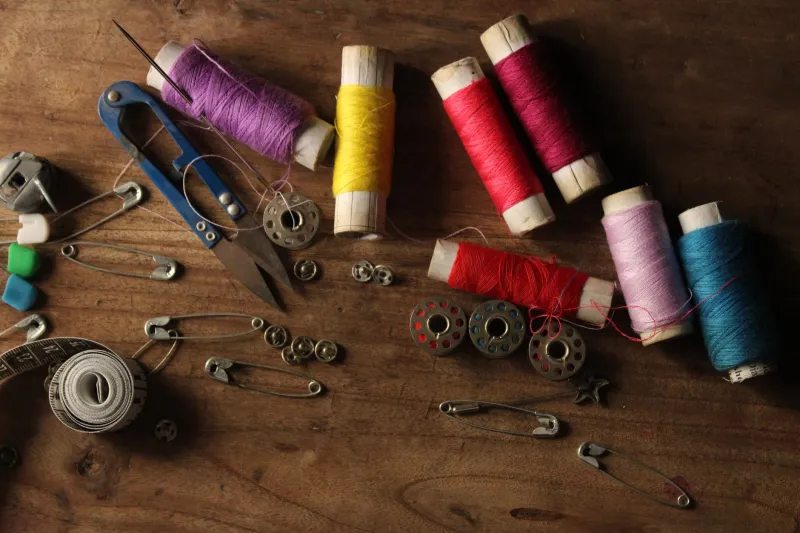
Almost every household has a tin of random buttons. Almost none of them match anything. The useful version is smaller and more deliberate: a few spare buttons taken from the inside seam of new coats and jackets, plus a couple of neutral buttons in navy, black and cream. Keep them with a needle and thread that actually match the garment, not the tin.
A missing button is the easiest repair to postpone and one of the most damaging to ignore. A coat that flaps open in the wind gets worn less. A cardigan with one gap becomes a layer you cannot rely on. Reattaching a button takes five minutes and costs nothing if you kept the spare. If the spare is long gone, a near-match from a haberdashery or a larger branch of a High Street chain is fine. The point is to close the gap before the garment loses its place in your routine.
The curved needle earns its keep on heavy fabric
A straight needle will do most jobs, but a curved one makes awkward repairs much less annoying. It is the difference between wrestling a coat lining and casually stitching a hem back into place. Curved needles are especially handy for thick seams, bag straps and the inside of jackets where you cannot easily turn the fabric inside out.
You do not need a full surgical set. One or two curved needles in a mixed pack will cover most household fixes. Pair them with a thimble if you are pushing through denim or a wool coat; your thumb will thank you. This is also the tool that makes a loose lining feel fixable rather than fatal. A coat with a drooping hem lining is not finished — it just needs ten minutes and a slightly bent piece of steel.
Decent thread is the difference between a fix and a repeat
The thread that comes in tiny complimentary kits is often brittle and prone to snapping. A small spool of decent polyester thread in black, navy and grey will handle most repairs and last for years. Cotton thread has its place, but polyester is more forgiving on stretch fabrics and outdoor wear.
Match the thread to the fabric weight, not just the colour. Heavy coat thread on a lightweight blouse will pucker. Fine thread on a denim seam will snap. If you are unsure, err on the side of a slightly stronger thread and a smaller stitch. And do not underestimate the value of a decent pair of small scissors. Cutting thread cleanly stops the repair from looking like a repair.
A suede brush is rescue equipment, not decoration
Suede and nubuck are fair-weather friends in the UK. One damp commute and they can look patchy, flattened and dull. A suede brush — usually a cheap dual-sided job with brass bristles on one side and rubber on the other — lifts the nap and redistributes the surface. It will not fix a deep stain, but it will make a pair of suede boots look cared for rather than abandoned.
Use it dry, gently, and in one direction. Brush away light dirt before it works into the nap. For marks, the rubber side can lift scuffs without adding water. This is the tool that buys you another season from a high-street suede purchase, provided you accept that suede is not a rainy-day material. If the boots are soaked through, let them dry naturally and brush later. Radiators are not part of the kit.
A pill shaver needs a light touch
Bobbles make knitwear look older than it is. A cheap fabric shaver — the little battery or USB-powered kind — can transform a jumper in a few minutes. The trick is restraint. Press too hard or linger in one spot and you will thin the knit. Use short passes, keep the fabric flat, and stop when the surface looks even rather than bald.
This is a repair in the loosest sense: you are not mending a hole, you are removing the evidence of wear. That still counts. A jumper that has been de-pilled is more likely to be worn to the office, the pub or the school run. It also helps you judge whether a knit is genuinely finished. If the fabric is thinning across the elbows or the seams are going, a shaver will only delay the inevitable. But for surface bobbling, it is one of the best small investments in the drawer.
Know when to stop
Not every garment deserves a repair. A cheap pair of leggings with a blown seam may not be worth the thread. A worn-through sole on a favourite boot is a job for a cobbler, not a kitchen-table kit. The useful question is simple: will this fix get the item back into regular rotation, or am I just postponing a replacement?
Repair makes most sense on things with good bones — a coat that fits, a knit you actually wear, a bag with a solid strap. It makes least sense on items that were already marginal. The aim is not to keep everything forever. It is to stop good everyday clothes from leaving your wardrobe for want of a button, a brush or five minutes of attention.
The small kit, in full
A tin or drawer with these basics will cover most household fixes: spare buttons, a curved needle, a couple of decent needles, polyester thread in neutral colours, small scissors, a suede brush and a fabric shaver. Add a needle threader if your eyesight and patience are anything like mine. None of it needs to be expensive. Most of it will outlast the garments it saves.
The real essentials skill is not shopping more cleverly. It is noticing the small fault early and dealing with it before it becomes the reason a good thing gets retired.