The Long-Game Tee: Shop-Floor Checks for a Cotton T-Shirt That Will Still Earn Its Place
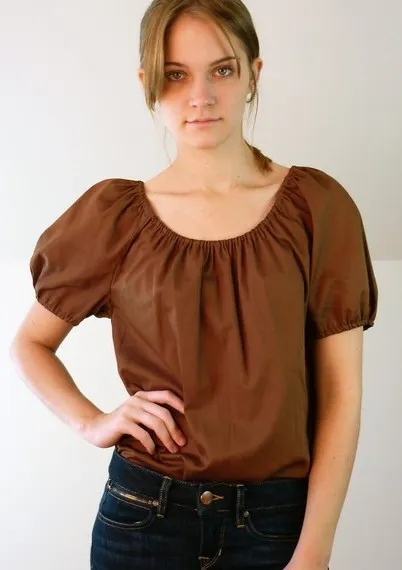
Photo: jessjamesjake vintage, CC BY-SA 2.0, via Wikimedia Commons
A plain T-shirt is one of the hardest-working things in a wardrobe. It goes under knitwear, over jeans, into the pub, through the school run and under a jacket when the British weather changes its mind halfway through the day. It also gets washed more than almost anything else we own. That is why paying extra for a tee is not automatically sensible. The question is not whether the cotton sounds premium. It is whether the thing in your hands will still look and feel right after a proper run of ordinary life.
You do not need to wait fifty washes to make a decent guess. You need ten minutes, good changing-room light and a willingness to ignore the label for a moment. Here is what to check before you decide that a T-shirt has earned its higher price.
Start with the neckline, not the marketing
The neckline is where a cheap tee usually gives itself away first. Hold the ribbing between finger and thumb and stretch it gently, then let go. It should spring back into shape rather than sitting there looking tired and slightly wavy. A neckline with good recovery will cope with being pulled over headphones, a bad hair day and the general indignity of getting dressed in a hurry.
Look closely at how the neckband is attached. A neat, even finish with a bit of substance is a better sign than a thin strip of ribbing that feels flimsy before it has even been washed. Check that the neckline sits flat when you try it on. If it stands away from the collarbone or ripples immediately, put it back. A wobbly neckline makes an otherwise decent T-shirt look scruffy, and no amount of careful ironing will fix the problem for long.
Turn it inside out and inspect the side seams
A side seam is not a guarantee of quality on its own, but it is useful information. Seams should run straight and sit flat, without puckering or little bubbles along the stitching. If the side seam already spirals around the body in the shop, the fabric may be prone to torque, which is the technical reason a hem starts to twist after washing. That twist is small, but it is the kind of detail you notice every time you put the tee on.
While you are inside out, check the shoulder seams and the hem stitching. Look for even lines and no loose threads. You do not need military-grade construction for an everyday tee, but you do want the basics to look deliberate. A T-shirt that is already messy on the inside will not become neater with age.
Judge fabric density with your hands
Hold the T-shirt up to the light. A white tee can be slightly sheer without being a problem, but if you can see the whole shop through it, it will probably feel thin in wear and thin out further with washing. Squeeze a section of the fabric gently and release it. It should have a bit of body and spring back reasonably well. If it feels limp, slippery or oddly stiff, be suspicious. Some finishes make cotton feel smooth in the shop but wash away quickly.
Fabric weight is a useful guide, not a rule. Lightweight tees around 140–160gsm can be lovely for summer or layering, while 180–220gsm feels more substantial for everyday wear. Heavier is not always better. A very heavy tee can be warm and rigid, which is not ideal under a jumper. What matters is whether the fabric feels dense enough for the job you have in mind.
Look for the hem twist before it happens
Lay the T-shirt flat and look at the hem. Is it straight? Does it curl up at the edges? Does the side seam pull forward or backward? A hem that already wants to twist is likely to get worse after a few cycles in the machine. Also check the length and shape. A slightly longer hem can be useful for tucking, but only if the fabric has enough weight to hang properly. A thin tee that is long and limp will cling in all the wrong places.
Decode the cotton language
Labels like Supima, Egyptian cotton, long-staple, combed, compacted and organic all mean something, but they do not all mean the same thing. Long-staple cotton tends to be stronger and smoother, which can help a tee last. Combed and compacted cotton usually feels cleaner and less fuzzy. Organic cotton refers to how the fibre is grown, not automatically how long it will last. A small amount of elastane can add stretch and shape, but too much can make a tee bag out at the elbows and hem.
The phrase “premium cotton” is not a regulated promise. Treat it as a starting point, then check the fibre content and the actual fabric. If the brand is shouting about premium cotton but the neckline is weak and the fabric is see-through, trust your hands over the hangtag.
The sixty-second changing-room test
Try the tee on and move around. Raise your arms, sit down, bend forward. Check that the neckline returns to position and the hem does not ride up awkwardly. Look at the shoulders: the seams should sit roughly where your shoulder ends, not halfway down your arm. If the tee feels like it is already working hard to stay in place, it will only get more annoying with wear.
Finally, think about price per wear. A £35 tee that survives two years of regular washing is better value than three £12 tees that go out of shape by spring. That does not mean every everyday tee needs to be expensive. It means the extra money should buy something you can actually detect: a neckline that recovers, seams that behave, fabric with enough density and a hem that hangs straight.
A fifty-wash T-shirt is not a fantasy. It is usually a tee that was judged properly in the first place. Buy the one that feels solid in the shop, not just the one with the best story on the label.