The Shape-Holding Chino: A Changing-Room Guide for Weekday Trousers
Chinos have a reputation problem. They are supposed to be the easy trouser — smarter than jeans, softer than tailoring, at home in the office, the pub and the Saturday market. Yet too many pairs start the week looking crisp and end it looking like they have been slept in. The knee bags, the pocket flare, the waistband that rolls: none of it is inevitable. It usually comes down to a few details you can check before you reach the till.
This is not about buying the most expensive pair on the rail. It is about buying a pair that holds its shape through ordinary British days: a damp commute, a desk chair, a school run, a pint. Here is what to look at in the changing room.
Start With Fabric That Has a Spine
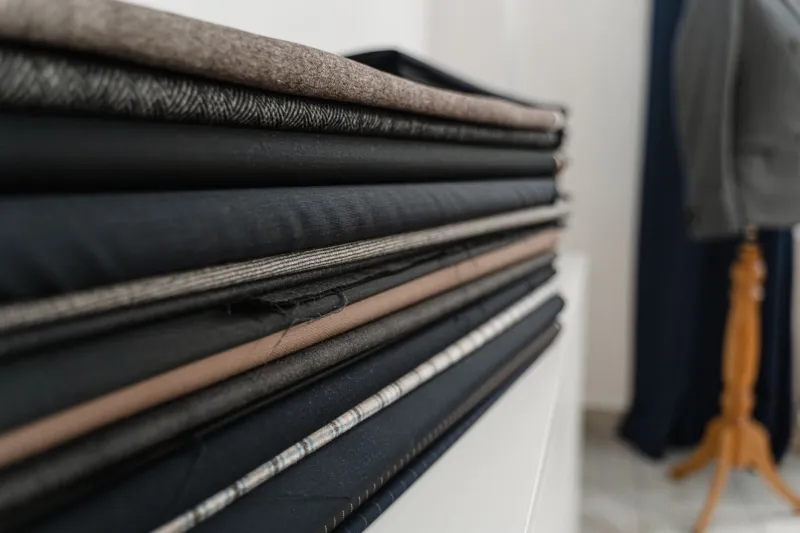
A chino should feel substantial enough to hold a crease but soft enough to wear all day. In the UK, where the weather rarely commits to anything, mid-weight cotton twill is the sensible starting point — roughly 260–320 gsm is a useful guide, though the feel matters more than the number. If the fabric feels thin and limp in your hand, it will probably look tired by Wednesday.
Stretch is not the enemy, but too much of it is. A small amount of elastane — around one or two per cent — can make a pair more comfortable without turning it into a legging. If the label says a higher percentage, be cautious. Stretch fabric can relax through the day, which is how you end up with a knee that bulges and a seat that sags.
Try the scrunch test. Gather a section of the trouser leg in your fist, hold it for a few seconds and let go. Good cotton twill should spring back reasonably well. If the creases stay sharp and deep, the fabric is telling you something. Also hold it up to the light. If you can see a lot through it, it will not hide much on a cold morning either.
The Rise and Waistband Do Quiet Work
Most chino problems start at the waist. A waistband should feel firm and structured, not like a folded ribbon. Look at the inside: a proper waistband will usually have a lining or some reinforcement. Give it a gentle twist. If it folds over easily, it will almost certainly roll when you sit down.
Rise matters too. A pair that sits too low will pull across the seat and gape at the back when you bend. A pair that sits too high can feel restrictive after lunch. There is no universal answer, but the waistband should sit where you naturally wear your trousers — and it should stay there when you move. If you need a belt to keep it in place in the changing room, the fit is already wrong.
Check the belt loops as well. They should be securely stitched and evenly spaced. It sounds small, but a flimsy loop will stretch or tear long before the fabric wears out.
The Changing-Room Checks That Actually Matter
You do not need a tailor’s eye to spot a chino that will let you down. You need five minutes and a willingness to move.
First, do a squat. Feet shoulder-width apart, lower yourself as if you are picking up a bag. Watch the knees. The fabric should fold naturally, not pull tight across the thigh or balloon outwards. Stand up and smooth the leg down. If the knee area stays stretched and puckered, it will bag during a normal day at a desk.
Second, sit down. Use the changing-room bench or a chair if there is one. Sit for at least thirty seconds, then check the waistband and the pockets. Does the waistband dig in? Does it gap at the back? Do the side pockets flare open like little wings? A good pair should stay reasonably flat. If you carry a phone in your pocket, put it in now. The pocket should cope without dragging the whole side of the trouser out of shape.
Third, walk. Twenty paces is enough. Check the seat, the crotch and the hem. There should be enough room to move without the fabric pulling. If the trousers feel tight across the hips or loose around the lower leg, try another size or cut. Chinos should not need breaking in like boots.
Hem Length, Pockets and the Weekend Problem
Hem length is where many otherwise good pairs fall down. A chino should meet your shoe with a slight break, or no break at all if you prefer a cleaner line. Anything that pools around the ankle will fray, collect drizzle and look scruffy by Sunday. If you are between lengths, buy the longer pair and have them hemmed. It is a small cost for a much better result.
Pockets deserve a mention because they affect how sharp the whole trouser looks. Side-entry pockets should lie flat when empty. Check the stitching at the pocket mouth. If it already looks puckered or wavy on the rail, it will only get worse. Back pockets should sit neatly, not halfway down the leg.
Colour is the other practical decision. A small rotation beats a drawer full of maybes. Start with a dark navy or charcoal pair for work and evenings, then add a stone or khaki pair for weekends. Olive is a useful third colour if you want something that hides a bit of city grime. Pale chinos look excellent in theory, but in a British winter they rarely stay pale for long.
A Small Rotation That Works Harder
Two or three pairs of chinos are enough for most people. Rotate them rather than wearing the same pair every day, and give the fabric a chance to recover between wears. Wash them inside out on a cool cycle, avoid a hot tumble dryer and line dry where you can. Heat is what kills stretch and fades colour.
Above all, be ruthless in the changing room. A chino that bags at the knee, rolls at the waist or gapes at the pocket will not improve with age. The right pair should feel comfortable straight away and still look presentable by Friday. That is the whole point of an everyday essential: it does the ordinary work without asking for attention.